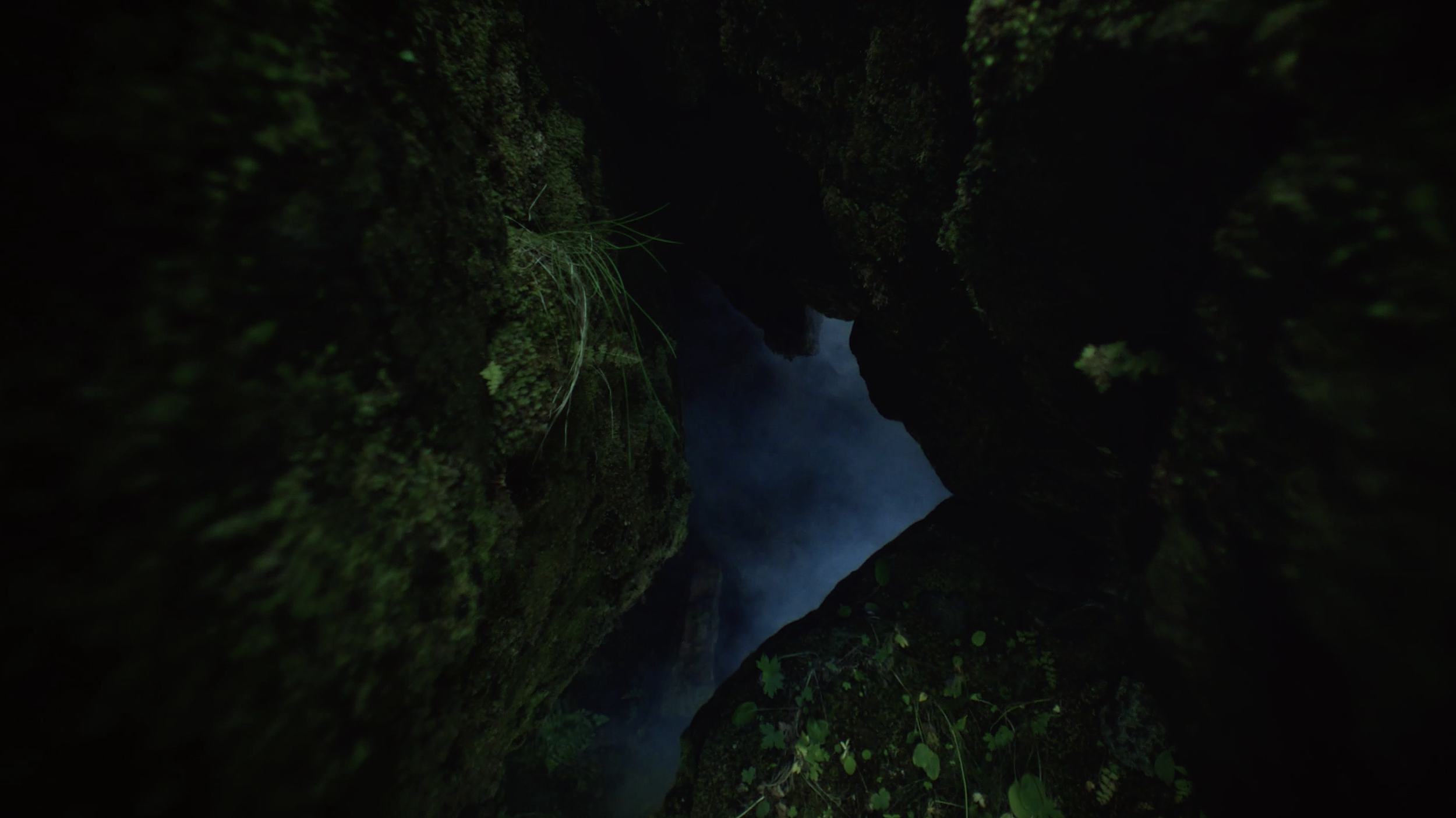
Current Explorations
Ritual, responsibility, and the spaces through which strangers become guests.
video by freya magnusdottir
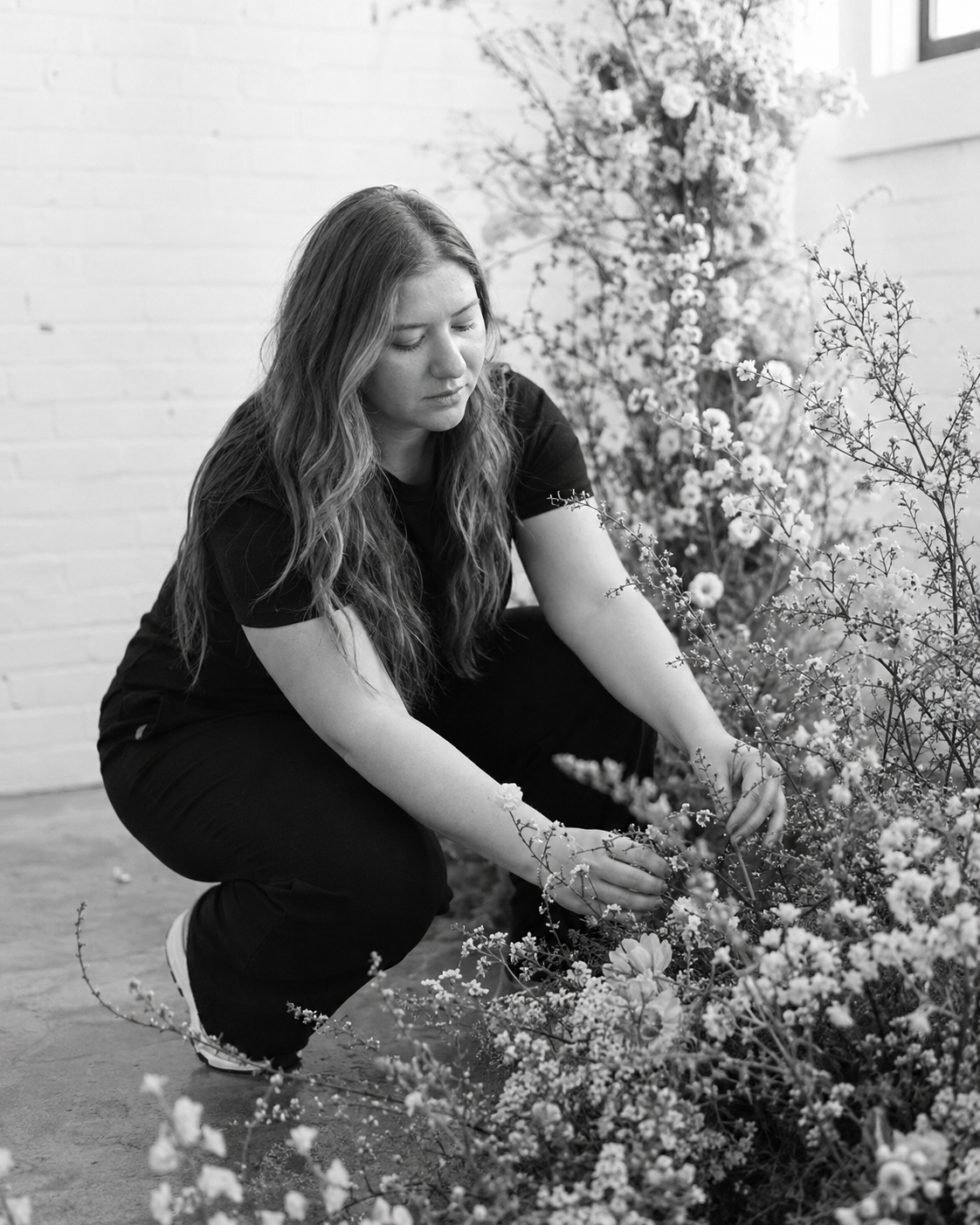
Interdisciplinary artist, writer, and floral installation designer

My practice moves between writing, photography, botanical installation, visual research, and shared gathering. I am interested in the rituals, environments, and acts of care through which people create belonging: how rooms are prepared, how memory gathers in place, and how strangers gradually become guests.
Selected Recent Work
Chromatic Becoming
Five visual studies in color, embodiment, and botanical form.What happens when color stops decorating a space and begins to shape the person inside it?
Chromatic Becoming is a series of visual studies imagining botanical environments in which flowers become more than ornament. They function as clothing, architecture, shelter, atmosphere, and extensions of the body itself.
Across five images, the figures move through ivory, orange, red, and deepening shades of blue. The progression follows an emotional passage: first appearing, then expanding, connecting, embodying, and finally surrendering to something larger than the individual self.
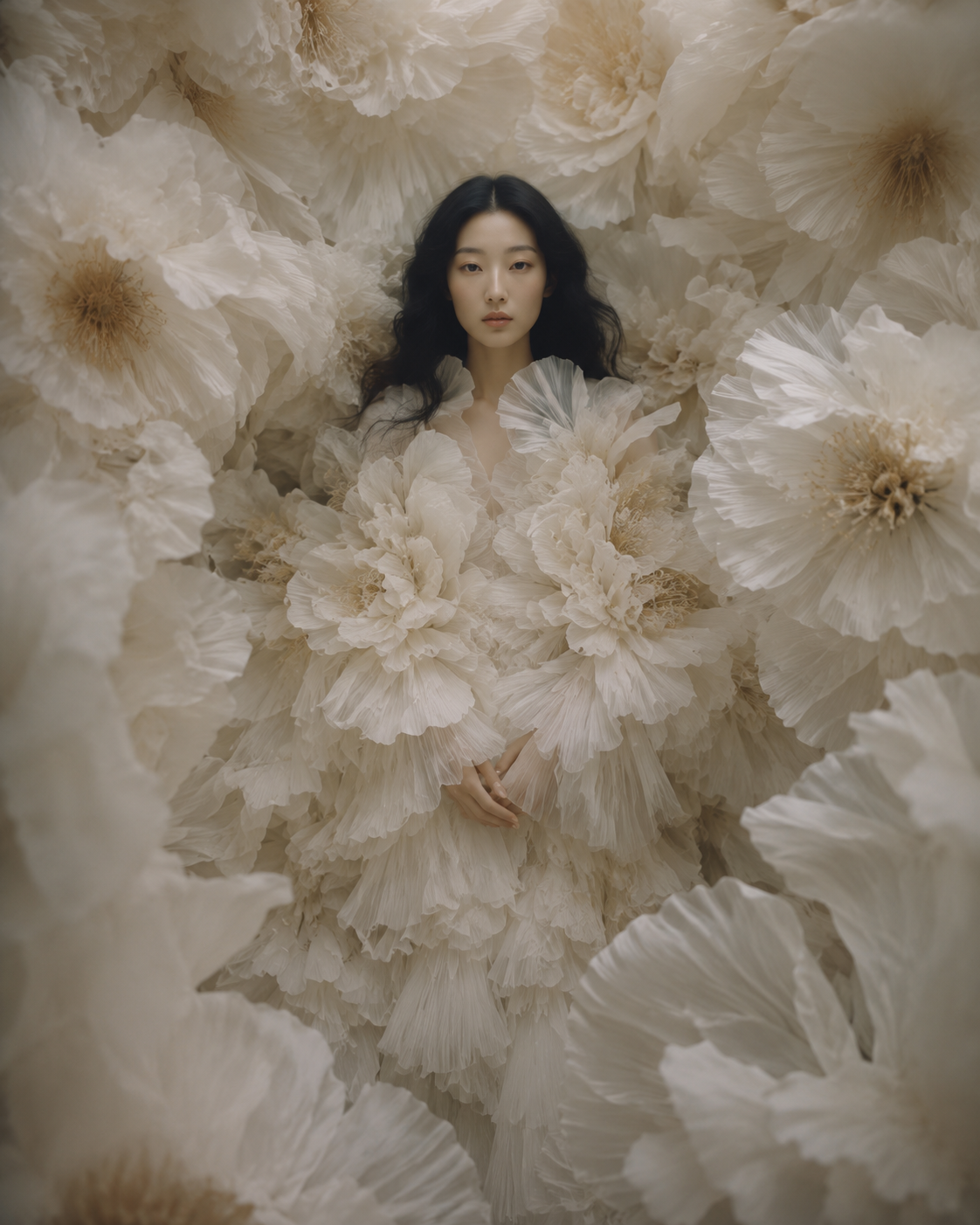
I. Emergence
The first figure appears inside an almost colorless world of ivory flowers. Her clothing and surroundings share the same translucent texture, making it difficult to determine where the body ends and the botanical environment begins.
This is becoming before it has acquired a clear identity. The figure is visible, but not yet separate from the world holding her. The flowers form a protective enclosure—a soft place in which something new can take shape without being hurried.
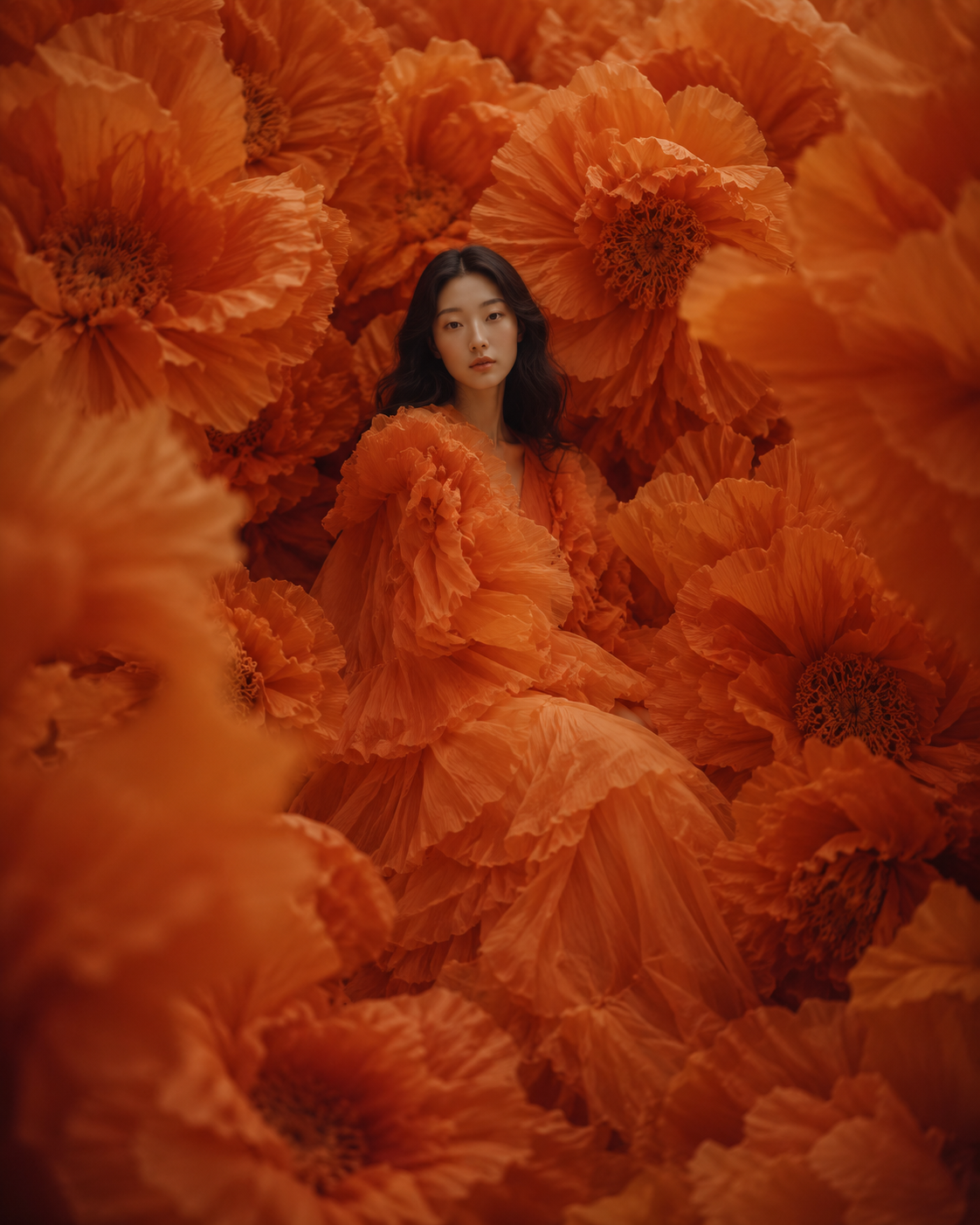
II. Incandescence
The second image moves into orange: a color of warmth, appetite, vitality, ripeness, and heat.
The figure is surrounded by flowers so large that they feel less like a garden than an internal climate. She appears to be formed from the same material as the environment, as though the landscape has briefly taken human shape.
Here, becoming is no longer tentative. It is expansive, physical, and alive.
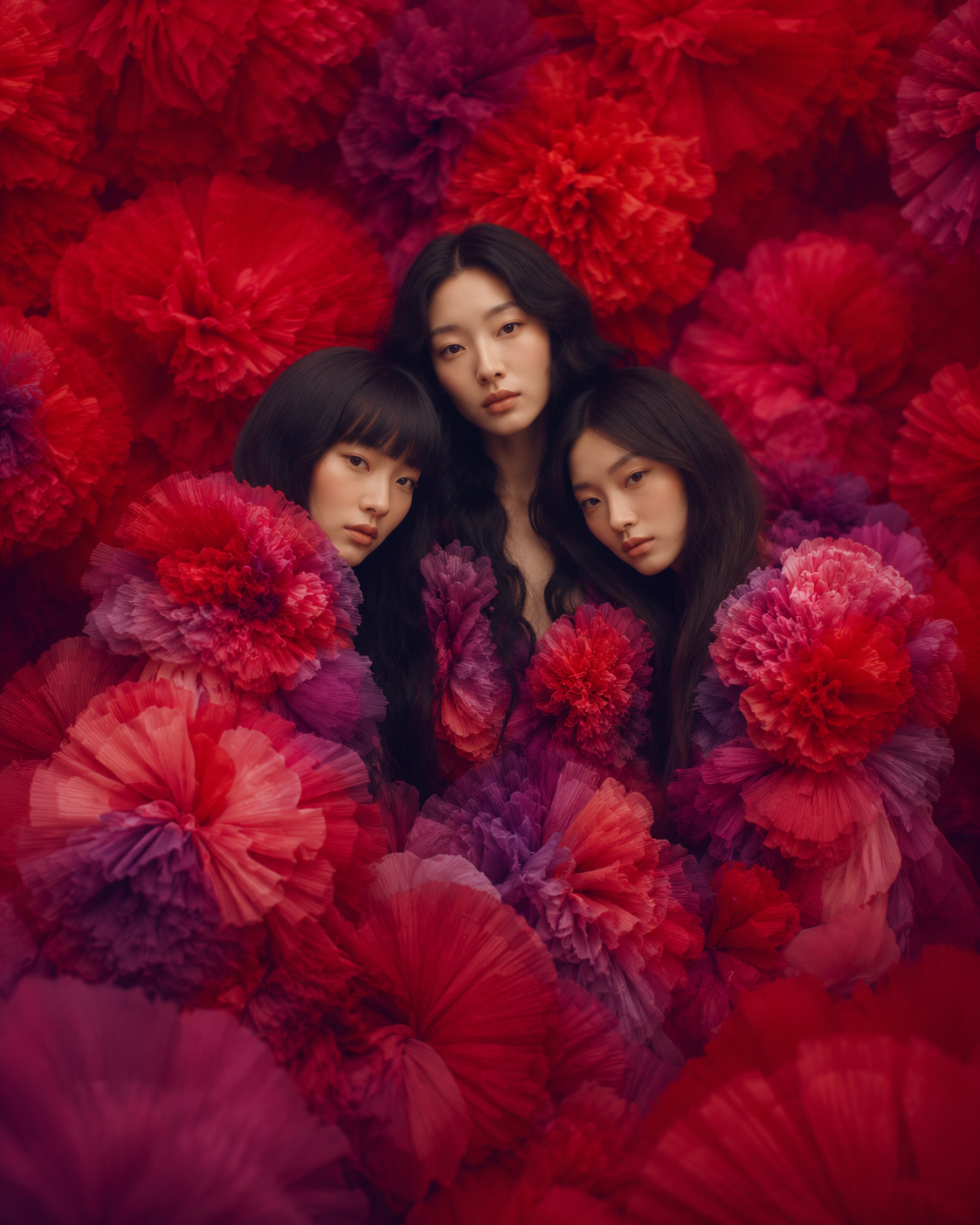
III. Convergence
The third image introduces three figures gathered within a single red and magenta botanical field.
Until this point, transformation has appeared solitary. Here, identity is shaped through proximity. The figures remain distinct, but their bodies, clothing, hair, and surrounding flowers overlap until the boundaries between them begin to soften.
The image explores belonging as a negotiation between two desires: to be recognized as an individual and to become part of something larger. Connection does not erase the self, but it changes its outline.
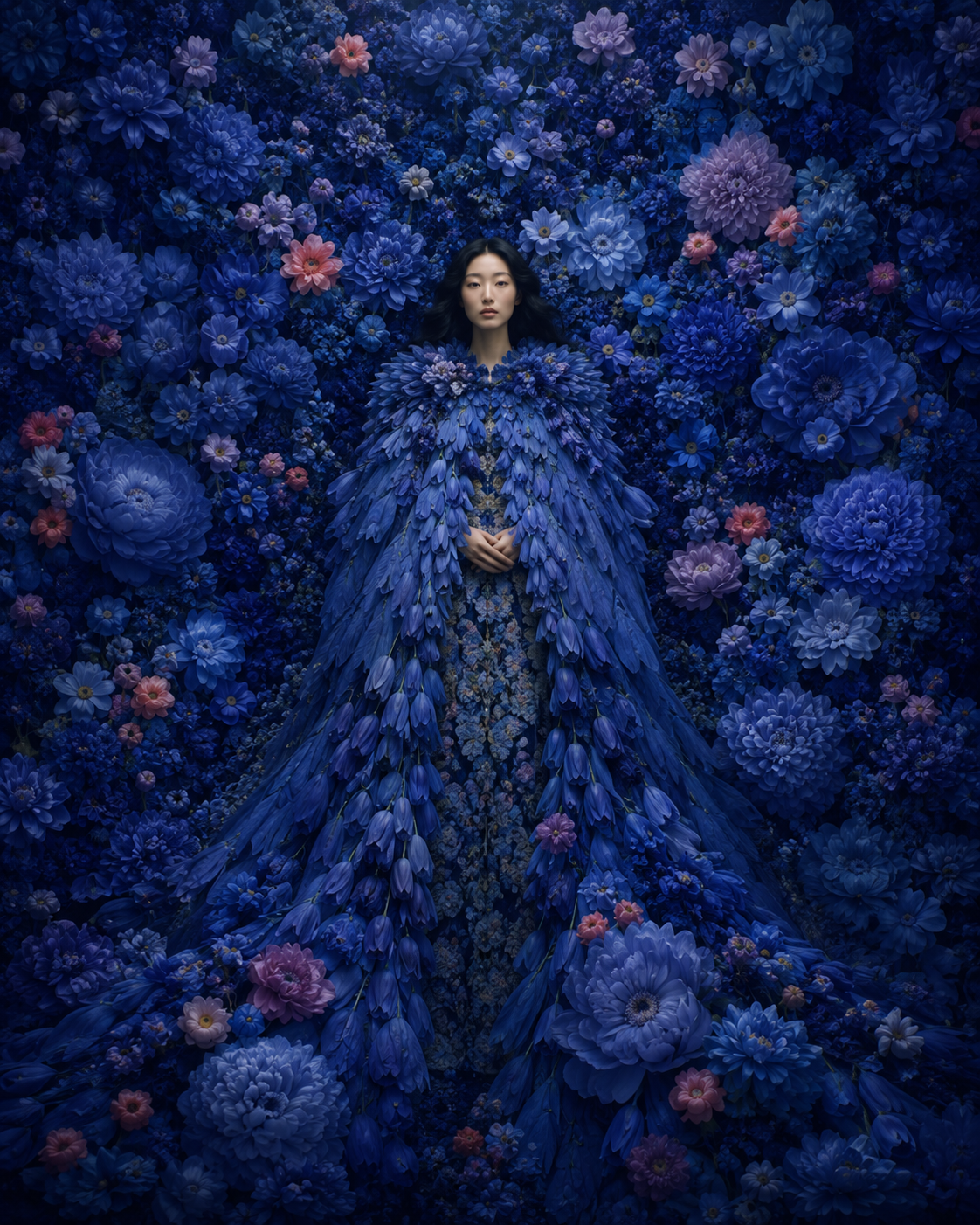
IV. Nocturne
In the fourth image, the botanical environment becomes a garment.
Flowers descend from the figure’s shoulders like a ceremonial cloak, connecting her body to the dense field behind her. What once surrounded the figures has now been taken inward and carried visibly.
This is the most deliberate stage of transformation. The figure does not merely inhabit the landscape; she embodies it. Petals become protection, adornment, memory, and weight.
Transformation is often imagined as leaving an old self behind. I am more interested in the possibility that we accumulate our former selves—that identity develops through layers of place, relationship, experience, and care.
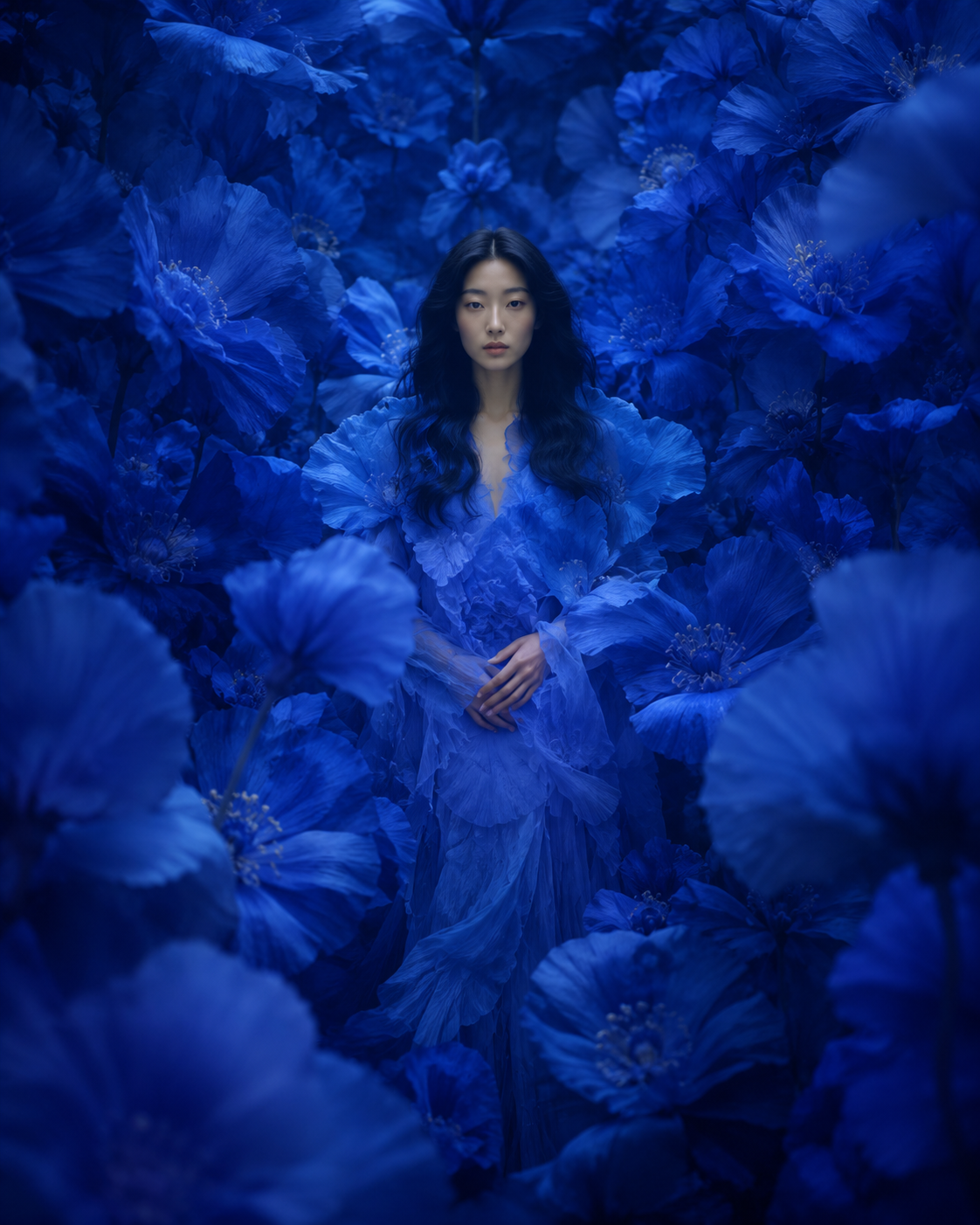
V. Blue Reverie
The final image returns to a single figure enclosed by oversized blue flowers.
After the visual authority of the previous portrait, this image feels quieter and less resolved. The figure no longer wears the landscape as a declaration. Instead, she recedes into it.
Blue creates a strange combination of intimacy and distance. It can suggest peace, longing, melancholy, night, water, and the unreachable edge of the horizon. The flowers offer sanctuary, but their scale also diminishes the figure within them.
This final stage is not disappearance so much as surrender. After emerging, expanding, connecting, and embodying, the self loosens its boundaries again.
The series ends near where it began: with a figure held inside a botanical world. But she is no longer waiting to become distinct from it. She has learned that belonging may not require separation at all.
Color as a place we enter
Although these works resemble portraits, I think of them primarily as environments.
Color alters our perception of temperature, scale, time, distance, and emotion. In these studies, it functions as temporary architecture, a space that surrounds the body and changes how that body is understood.
The flowers also move beyond decoration. They shelter, conceal, clothe, connect, and transform. They mark the changing relationship between the individual and the environment: first protected by it, then energized by it, connected through it, adorned with it, and finally absorbed into it.
I see these images as visual research for future botanical environments and staged photographic portraits: a way of testing scale, palette, atmosphere, and the emotional possibilities of total immersion.
Perhaps becoming is not a straight path toward a final, perfected self. Perhaps it is a repeated movement between emergence and surrender, between taking form and allowing ourselves to become part of something larger.